Medically reviewed by Dr. Angela Tran, DO, double board-certified in Internal Medicine and Obesity Medicine · Originally published June 7, 2014 · Updated October 15, 2026
The short answer
Blue-tinted “diet glasses,” the product usually sold as the vision diet, have no good evidence behind them. The idea that does have some evidence is portion perception: in a small University of Tokyo study, people ate about 10% less when augmented-reality glasses made a cookie look 50% bigger. You can use the same effect without gadgets by serving smaller portions.
Have you ever heard the expression, “Your eyes are bigger than your stomach,” to describe someone who orders a lot of food and then can’t eat it all? It turns out some people think your eyes are the way to help you lose weight. The goal is to change the way you see your food so that you change how much you eat. In principle, this is reasonable, but there are two approaches: one that might actually work, and one that does not.
Two vision diet approaches
In the late 2000s, a Japanese inventor came up with the first vision diet. It rests on the idea that most appetizing foods are in the red and yellow spectrum, which is supposedly why so many fast food chains use those colors in their logos. To counteract this, you wear blue-tinted glasses that make your food look an unappetizing blue.
A few years later, researchers at the University of Tokyo came up with a more sophisticated approach. Using augmented-reality glasses, their system recognized a food item in your hand and made it look bigger or smaller in real time. The thought is that if your portion looks bigger, you’ll feel satisfied sooner and eat less.
Do vision diet glasses work?
There’s no reason to believe the blue glasses, the ones usually sold as the vision diet, actually work. They cast a pale blue pallor over your food, but there are no controlled trials showing that people wearing them eat less or lose weight.
The glasses that change the apparent size of your food did show an effect. In the inventors’ experiment, a dozen people ate about 10% less when a cookie was made to look 1.5 times bigger, and about 15% more when it was made to look a third smaller. So the apparent size of a portion does seem to influence how much we eat. A 10% reduction in eating could be enough to create a calorie deficit and gradual weight loss. But it was a very small lab study, and that system was a research prototype; the glasses that have actually been sold to dieters are the blue ones.
Use portion size, not gadgets
The good news is that you don’t need special glasses to use this effect. A Cochrane review of 72 randomized trials found that people consistently eat more when they’re offered larger portions, packages or plates, and adults are especially affected. Flip that around and it becomes a tool:
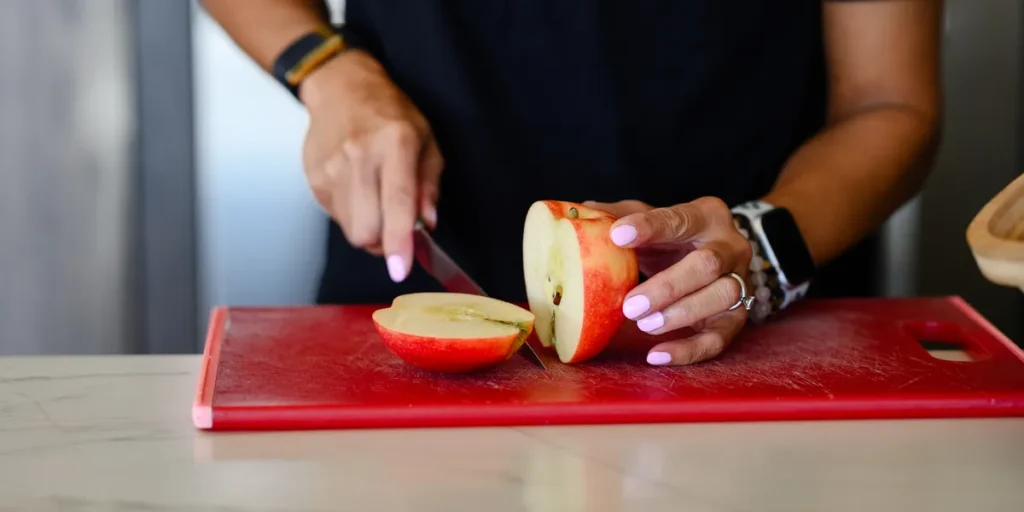
- Serve a set portion on a plate instead of eating from the bag or box.
- Fill half your plate with vegetables, so the plate looks full with fewer calories.
- Start each meal with protein, which helps you feel full sooner.
- Keep serving dishes off the table so second helpings take a deliberate trip.
If you’ve done all of this and hunger still wins, that isn’t a willpower problem. Appetite is biology, and it can be treated. A physician can look for medical causes and talk with you about options like GLP-1 medications.
A practical, tested approach
If you are looking for a practical, effective, tested weight loss method, Med-Fit Medical Weight Loss can help. Compare Med-Fit programs, or see how Comprehensive Coaching helps you build portion habits that last.
Want a plan that works without gimmicks?
Book a consultation with Dr. Angela Tran, DO, or text us where you’re starting from.
Book a consultationText usCall (720) 823-8075
Medical care and prescriptions for Colorado residents · Coaching wherever you live
Frequently asked questions
What is the vision diet?
The vision diet is the idea that changing how food looks changes how much you eat. The version sold to dieters is a pair of blue-tinted glasses meant to make food look unappetizing. A separate research version used augmented-reality glasses to make portions look bigger.
Do blue glasses help you lose weight?
There’s no good evidence that they do. They tint your plate blue, but there are no controlled trials showing that people who wear them eat less or lose weight over time.
Does plate size affect how much you eat?
Size cues do matter. A Cochrane review of 72 randomized trials found that people consistently eat more when they’re given larger portions, packages or tableware, and most of that evidence comes from portion size itself.
What actually works for portion control?
Serve yourself a set portion instead of eating from the package, fill half the plate with vegetables, start with protein, and keep second helpings out of sight. If hunger keeps overriding your best plans, a physician can check for medical causes and discuss options like GLP-1 medications.
Sources
- Narumi T, et al. Augmented perception of satiety: controlling food consumption by changing apparent size of food with augmented reality. CHI 2012
- MIT Technology Review. AR eyewear fools your belly and brain into feeling full (2012)
- Hollands GJ, et al. Portion, package or tableware size for changing selection and consumption of food. Cochrane Database Syst Rev 2015
- Leidy HJ, et al. The role of protein in weight loss and maintenance. Am J Clin Nutr 2015
Photo: Lisa Lilo